Key Stills
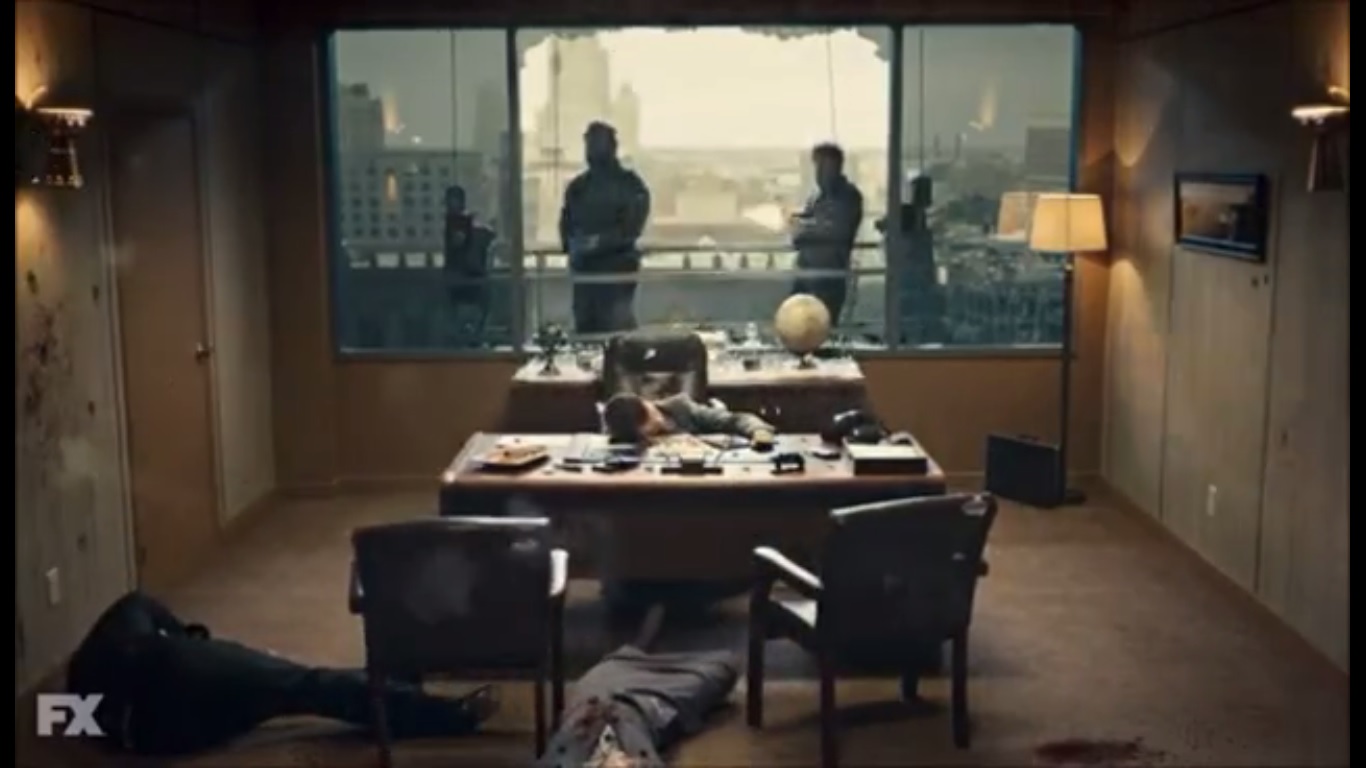
The cold open: Gerhardts in a window-washer’s basket gun down a Kansas City management meeting through the glass. Corporate violence framed as routine maintenance.
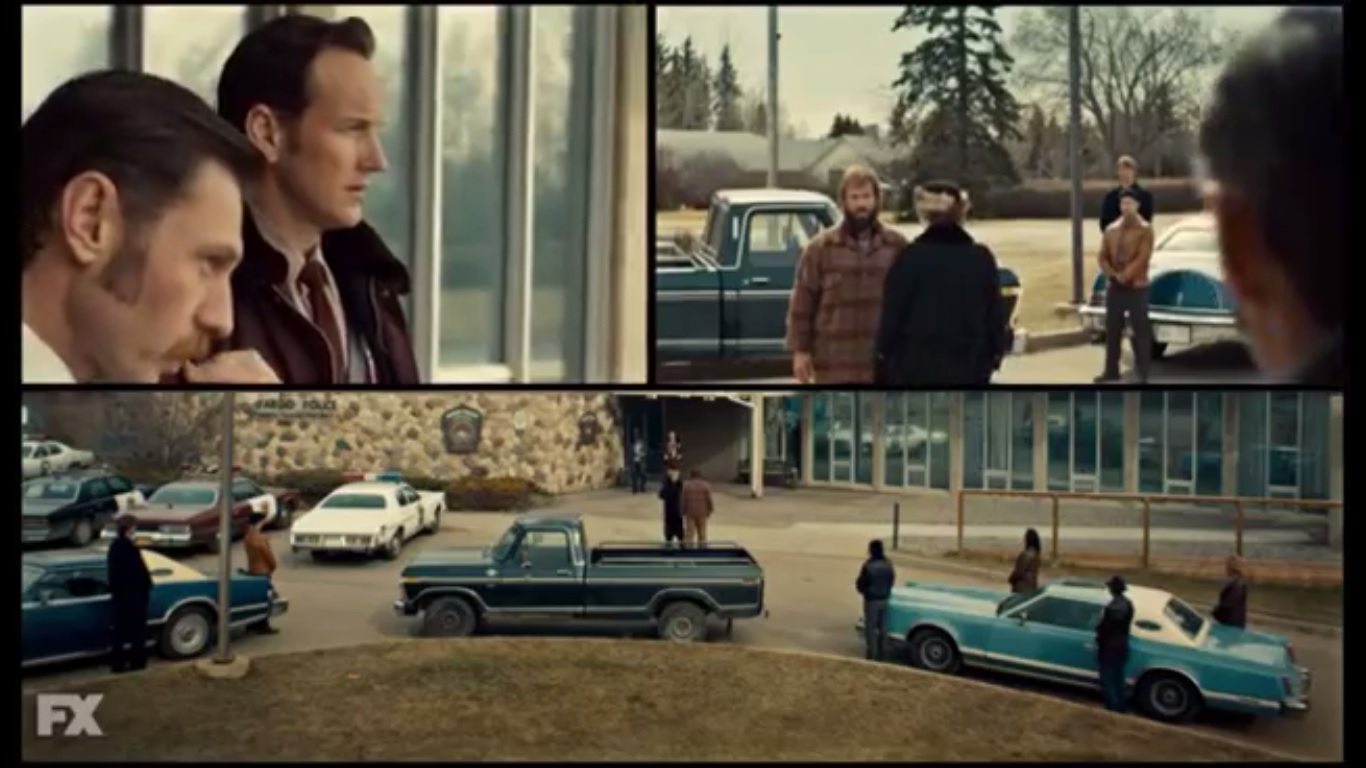
Floyd is released from the police station after cooperating with Chief Gibson. Lou’s reaction: “the police just chose a side in the war.”
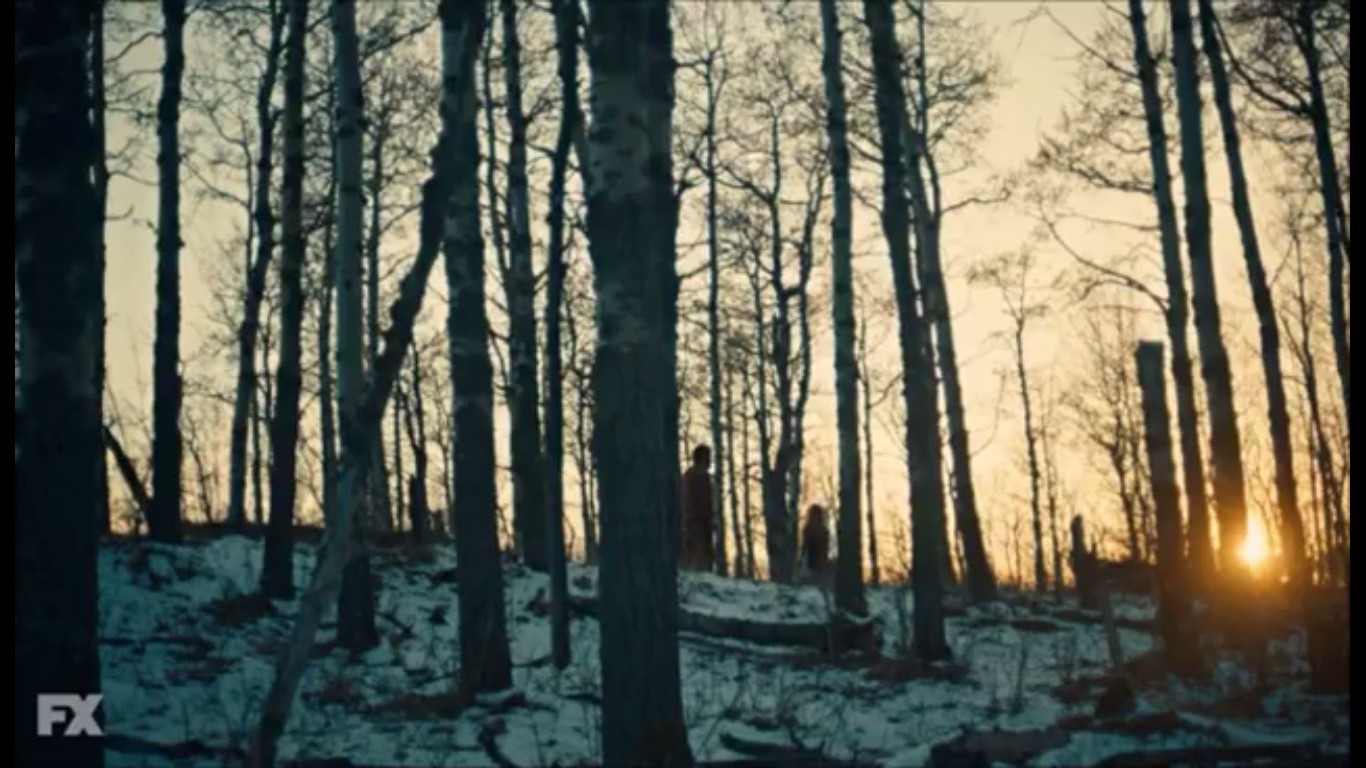
Bear orders Simone to kneel in the woods. The patient son becomes the family’s executioner. The virtues we celebrated in E06 are exactly the virtues that make Bear the right person to do this.
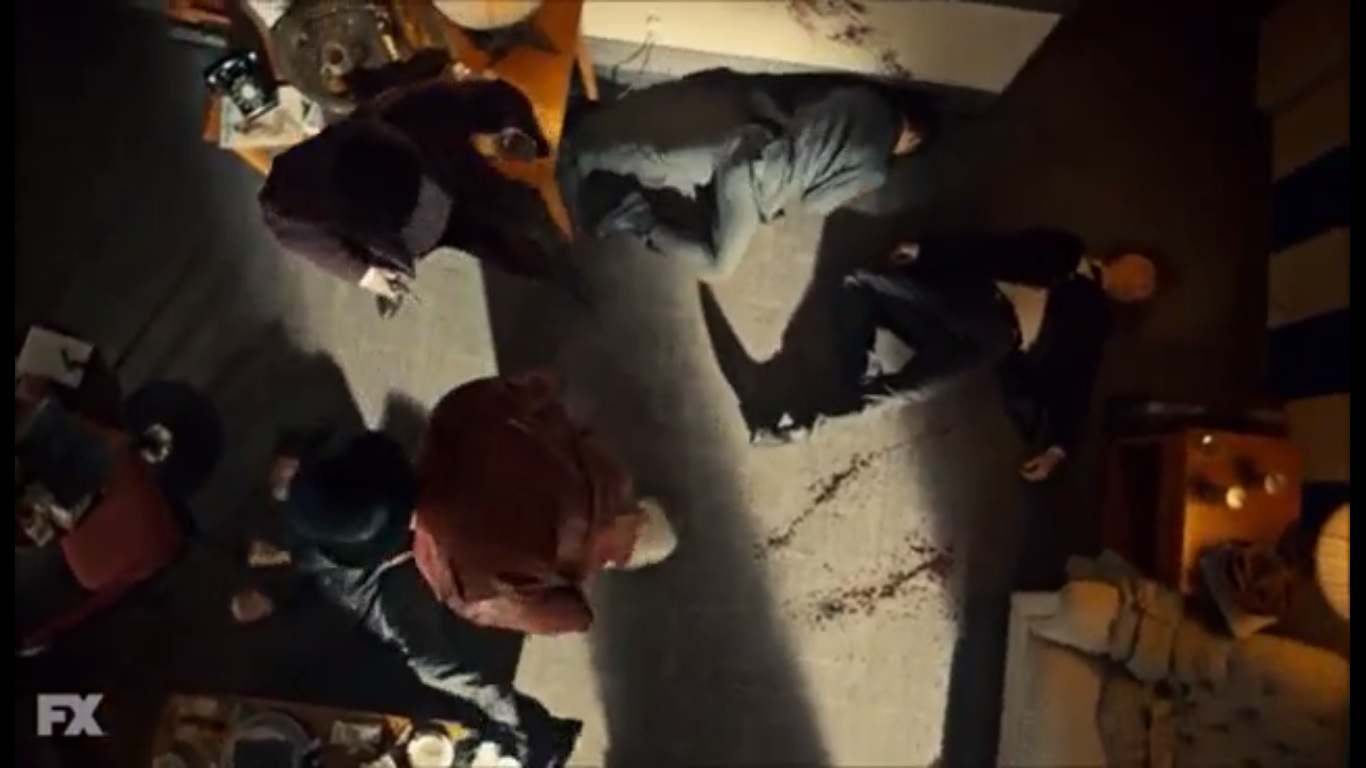
Mike Milligan and Gale Kitchen kill the Undertaker and his crew. The corporate discipline sent to replace Mike becomes the body in the room. The title spoken in a literal kitchen.
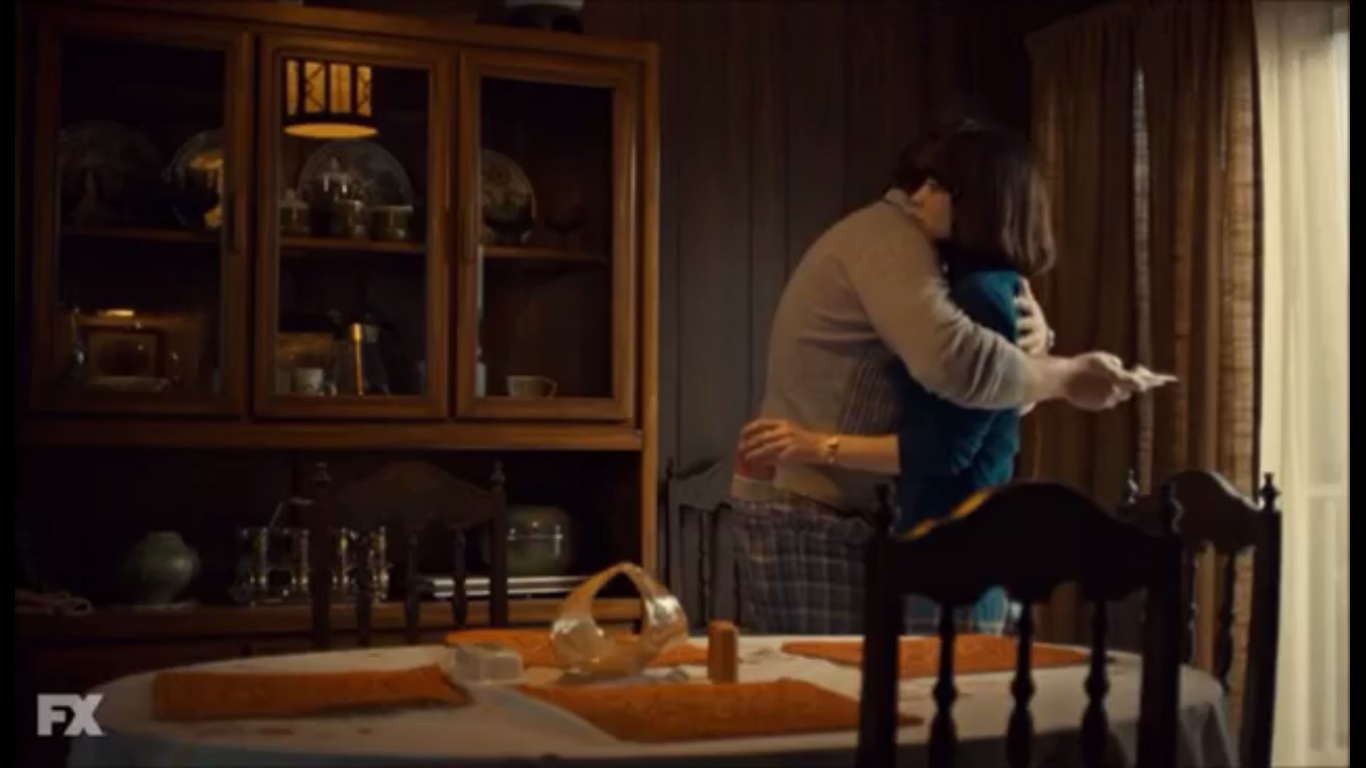
Karl Weathers visits Betsy Solverson, who is dying. Berenger as caretaker — civilization in its quietest form.
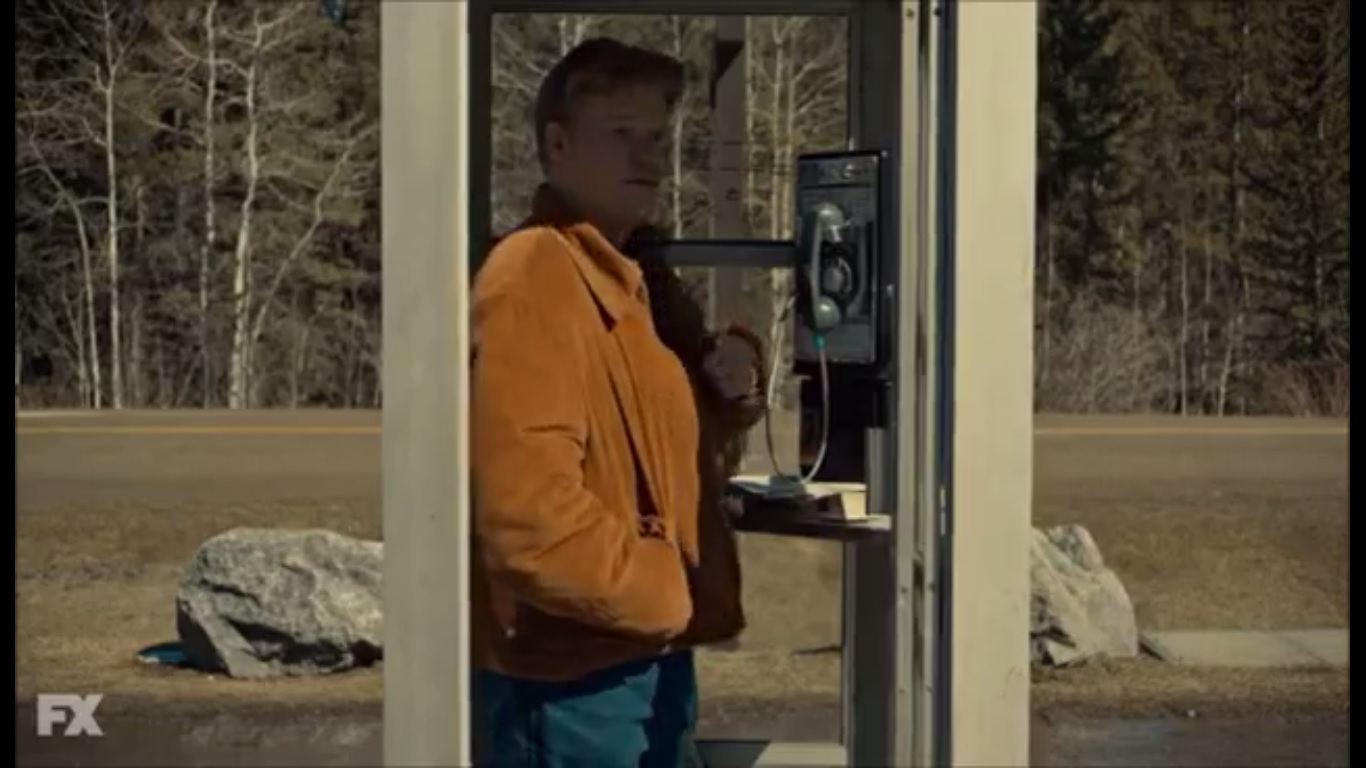
Ed Blomquist tells Mike Milligan he has Dodd Gerhardt in his car. The rhinoceros has learned to negotiate.
Episode Summary
A cold open: Gerhardts in a window-washer’s rig gun down a Kansas City management meeting through the boardroom window. The day after, Otto Gerhardt is buried, Floyd is arrested by state police, and Chief Gibson lets her go in exchange for cooperation, taking the case away from Lou. Mike Milligan, blamed for KC’s losses, is targeted by the Undertaker and a new crew sent from head office; Mike turns Gale Kitchen, kills the Undertaker, and reverses the corporate script. Bear walks Simone into the woods and shoots her for her betrayal. Karl visits Betsy Solverson, who is dying of cancer, and accepts her instructions for after she’s gone. Ed and Peggy, on the run with the captured Dodd in the trunk, meet Mike Milligan to offer Dodd as the price of their freedom. Hank talks about ghosts.
The Title
Where it comes from. “Did You Do This? No, You Did It!” is a Borscht Belt / Yiddish-vaudeville comic recursion. The classic version is a two-man sketch over a body, a broken vase, or any inconvenient object: one man points at the other and says “did you do this?”, and the other points back and says “no, you did it!” The joke is that the recursion never resolves — the accusation just bounces between two parties forever, and the body in the room becomes nobody’s responsibility. It is one of the oldest jokes in Jewish comedy because it is one of the oldest social mechanisms in any group: when something has gone wrong, the cheapest move is to point at the other person while the other person points at you. Nobody owns the act. The joke is the recursion. The horror is that it works.
Where it lands in the episode. The line is delivered, almost verbatim, by Mike Milligan in the kitchen scene where he and Gale Kitchen kill the Undertaker and his crew. After the bodies are on the floor, Mike performs the recursion as a punchline — pointing, mock-accusing, the corporate violence reframed as a vaudeville bit. The episode is then constructed around that single speech act repeated at every other level of the story: Kansas City head office accuses Mike of the war’s losses (he reverses it and makes the office the body); Lou accuses Ben Schmidt of being “a shit cop” (Ben points back up the chain of command to Chief Gibson); the Gerhardts close ranks around Simone’s betrayal without anyone naming what the family did to produce a betrayer. The title is the scene; the scene is the season’s argument; the argument is the joke.
The triple pun. “Did You Do This? No, You Did It!” is also a triple pun specific to the kitchen scene. The Borscht Belt recursion is the first layer. The Kitchen brothers — Wayne and Gale Kitchen, KC’s enforcers — are the second; their surname is the location. The third layer is the literal kitchen the killings happen in. Mike walks into a kitchen, dispatches the men named Kitchen, and delivers the line. Hawley is fond of titles that fold three meanings into one phrase, and this is one of his cleanest.
What the title is doing. The recursion is the show’s reading of how authority works in late-capitalist America: nobody signs anything; every decision was made by the person below you; every body is somebody else’s responsibility. The corporate hierarchy is structurally designed to be unable to answer the question “did you do this?” The episode’s quiet bleak claim is that the only way to win the recursion is to do what Mike does — kill the person trying to land it on you. Everyone else in the episode loses the recursion. The Gerhardts lose Simone to a discipline they cannot articulate. Lou loses jurisdiction to a state authority he cannot name. The cop who can say “I did this” — the cop with moral seriousness — is the one the system removes from the case.
Key Insights
The title’s recursion as the season’s structural argument. Building on the title section above: the speech act in this episode runs up the corporate and family hierarchies and never lands on a name. Kansas City head office tells Mike you did this, and Mike makes them the body; Lou tells Ben Schmidt you’re a shit cop, and Ben points back at the chain of command; the Gerhardts close ranks around a betrayer, and no one names what they did to produce her. The recursion is not just dialogue. It is the show’s reading of authority itself: every body is somebody else’s responsibility, all the way up.
The cold open: corporate violence as window-cleaning. The episode opens with Gerhardt assassins gunning down a Kansas City management meeting from a window-washer’s basket — through glass, into a boardroom, in broad daylight. The framing is pointed. We do not see soldiers killing soldiers; we see administrators being murdered in the room where they were administrating. The scaffolding rig and squeegees are visible. The episode begins by literalizing what the war has become: business violence framed as routine building maintenance. The Gerhardts, briefly, have learned the corporate game — they are not killing enforcers any more, they are killing managers. The image is also the show’s clearest visual statement of the title: the people in that boardroom never personally did anything to anyone. Their hands are clean. The bodies are real anyway.
Bear executes Simone — the patient son becomes the family’s hand. This is the episode’s most devastating beat and a brutal correction to the reading we developed in E06. We named Bear as “Floyd’s qualities in a son” — patient, measured, capable of leading. We argued his virtues were timed wrong for the family’s situation; that “his moment is not now.” E07 brings Bear’s moment in a way the reading did not anticipate. Bear walks Simone into the woods, has her kneel, and shoots her — not as Dodd would (recklessly, ego-driven, performative) but the way Floyd would have ordered it (cleanly, judicially, because the family cannot survive an unaddressed betrayal). The cruelty of this for Bear is the show’s argument that Otto’s pattern does not need to produce a Dodd. It will use whatever son it has. Bear’s patience and judgment, the very qualities we called virtues, are the qualities that make him the right executioner: the one who will not enjoy it, the one who will think it through, the one who will not flinch. The family does not need a cold-blooded heir; it needs a reluctant judicial one, and Bear is that. The “moment is not now” we read in E06 turns out to mean something darker than waiting. It means his moment was never about leading; it was about enforcing. The Gerhardts produce the executioner the situation calls for. They produced Bear.
Mike Milligan flips the corporate script — the only character who beats the recursion. Hamish Broker, Kansas City’s corporate authority, sends the Undertaker to discipline Mike for the war’s losses. The Undertaker is, structurally, KC’s “you did this” delivered as a man with a gun. Mike’s response is to literally turn the script: he flips Gale Kitchen, kills the Undertaker, and makes the bodies in the room belong to the corporate decision that put them there. The scene is the title rendered as action. The Undertaker’s name is the show’s wink — the man named for the work everyone in this episode is doing. Mike is the only character who refuses the position the recursion is trying to put him in. The corporate office sent him to do violence and now wants to make him the named author of the violence; Mike returns the violence to the office. He survives by becoming the office’s mirror. This is the season’s bleakest argument about KC vs. the Gerhardts: corporate violence absorbs internal losses by reorganizing; family violence cannot. KC after the Undertaker keeps moving. The Gerhardts after Otto, Rye, Charlie, and Simone are running out of family.
Lou loses jurisdiction — the institutional support for moral seriousness erodes. Chief Gibson takes the Gerhardt case. Floyd cooperates and is released. Lou, who had Ed days ago, now has neither Ed nor Floyd. His response — “the police just chose a side in the war,” and calling Ben a shit cop — is the season formalizing the cost of his moral seriousness. The lawmen succession we read as working in E06 — Hank in the kitchen, Lou at the cell — is now under attack from above. The institutional architecture that made their complementary work possible is being dismantled by a state-level politics neither of them controls. Lou’s virtues do not erode. The system that recognized them does. This is the episode’s quietest answer to the title: when did you do this no you did it runs all the way up the chain, the cop who can clearly say “I did this” — the cop with moral seriousness — gets removed from the case. The system selects against him.
Karl visits Betsy — civilization as caretaking. Karl, the Berenger figure of E05/E06, spends this episode not standing between an army and a porch but sitting with a dying woman. Betsy gives him instructions for after she dies. The scene is the show’s tenderest counter-evidence to the recursion of blame elsewhere. Somebody is owning what they’re doing, and it is the town drunk taking instructions from the sheriff’s daughter for caring for her family after her death. The civilizational work of E05/E06 — articulating law, holding a porch — is the same civilizational work as this: the unimpressive person doing the unglamorous job that nobody else will do. The two acts are the same act in different rooms.
Ed delivers Dodd — the Blomquists graduate. At episode’s end Ed offers Mike Milligan a trade: Dodd’s life for the Blomquists’ freedom. This is the moment Ed’s transformation completes its second stage. The rhinoceros of E06 was a man whose ordinary life had taken the form of the violence around him. The Ed of E07 has read the corporate logic of the war and is now negotiating inside it. He is no longer Lou’s case to close; he is Mike’s leverage. The Blomquists, whose entire arc has been ordinary people in over their heads, are now competent in the language of crime. The show is making its most chilling argument about transformation: it does not end at the rhinoceros stage. It ends when the rhinoceros learns to operate. Peggy’s actualization arrived at a kitchen with a cattle prod in E06; Ed’s arrives at a meeting with Mike Milligan in E07. Both are timed wrong for the futures they wanted. Both are real.
Hank talks about ghosts. In an episode constructed entirely around mutual blame, Hank gestures at the layer of the world that is not authored by anyone. Ghosts. The unknowable. The thing that is not in the recursion because it has no person to point at. This is the season’s first deliberate return to the register of the UFO since E01. The show is reminding us, under all the corporate and familial accountability theater, that there is a layer of the world that does not work this way. People die who nobody killed. Things happen that nobody decided. The recursion of did you do this no you did it is a frame for the parts of the world that have authors. It is not the whole world. The episode’s hardest argument about the title is also its most generous: the corporate frame does not contain its own meaning.
Character Readings
Floyd Gerhardt — Arrested, then released by state authority in exchange for cooperation. Survives this episode by making her capability a tool of state institutions rather than family leadership. The matriarch we have been reading as the only Gerhardt who could lead has, in this episode, leadership taken away from her by both the family (which still defers to Otto’s pattern) and the state (which will use her to close the case). She is alive at the end and effectively powerless. The character we celebrated as Otto’s true heir is, by the end of E07, a witness to her own family being dismantled by forces she no longer commands.
Bear Gerhardt — Walks Simone into the woods. Has her kneel. Shoots her. The patient son does what the family requires. The reading of Bear as “Floyd’s qualities in a son, virtues timed wrong” is corrected here: Bear’s virtues are not waiting for a different moment; they were always being shaped for this moment. The Otto pattern does not require a cold-blooded heir to produce family discipline. It produces whatever heir the situation needs and the patient one is, here, exactly the right tool. The deepest cruelty of the episode is that Bear’s reluctance is precisely what makes his execution of Simone valid in the family’s logic. A reckless killing would be a Dodd act. A judicial killing is a Bear act, and the family needs the second.
Simone Gerhardt — Killed by her uncle for the betrayal arc that began in E03 and closed in E05. The character we read as a private rebel becoming an actionable betrayer reaches the end of that arc here. Crucially, the family that disciplines her cannot articulate what they did to produce her. Dodd’s contempt for women, the Gerhardts’ inability to imagine female heirs, the structural blindness that made Simone’s grandmother the family’s most capable leader and her father the family’s most reckless one — none of this gets named. Simone dies in the recursion. Nobody owns what made her.
Mike Milligan — Targeted by the corporate office, kills back. The only character in the episode who refuses the position the recursion tries to assign him. Mike’s survival strategy is also the season’s clearest argument about how corporate violence works: the field operator survives by being willing to do the office’s violence back upward. Mike does not become accountable; he becomes the next decision-maker. The character whose poetry and charm have been the show’s most entertaining surface is, in this episode, revealed as the most structurally lethal. He is the one figure who can speak the title’s recursion and make it land on someone else.
Lou Solverson — Loses jurisdiction. Calls Ben Schmidt a shit cop. Names what Chief Gibson has done as choosing a side. The “soft” Lou the user named in E06 is, in E07, sharper. The institutional architecture that made his softness a moral choice rather than a tactical failure is being pulled out from under him, and his anger sharpens accordingly. He is still Lou — he does not break Ed at gunpoint, does not cross the line his ethics hold — but he is now operating without institutional cover. The next two episodes will test whether his virtues can survive without the system that recognized them.
Hank Larsson — Talks about ghosts. The older lawman holds the deeper register the episode otherwise excludes. Hank does not enter the recursion. He gestures at what is outside it. The show’s structural use of him in this episode: in a story about who is to blame, Hank is the one who keeps the layer of the unknowable on the table. This is what makes him useful as Lou’s elder — he carries the part of the moral world that does not work as accountability theater.
Karl Weathers — Visits Betsy. Receives her instructions for after she dies. Hugs her. The Berenger figure as caretaker. The two roles — civilization’s articulator, civilization’s nurse — turn out to be the same role in different rooms. The town drunk who held the porch in E05 and the station door in E06 is, in E07, holding a chair next to a hospital bed. The show is being explicit about what it thinks civilization is: someone unimpressive doing what nobody else will, including showing up for the dying.
Betsy Solverson — Dying of cancer, gives Karl instructions for after. The episode’s clearest example of someone owning what they’re doing. Betsy is not in the recursion. She is doing the only piece of work the recursion cannot perform: planning, transparently, for her own absence. The episode treats her with quiet dignity. Cristin Milioti plays her without softness or self-pity. She is one of the show’s strongest moral figures because she refuses the mode the season’s adults default to.
Ed Blomquist — Captures Dodd. Drives him to Mike Milligan. Offers a trade. The rhinoceros has learned the corporate language. Ed in E07 is more dangerous than Ed in E06 not because he is more violent (he is not) but because he has read the situation correctly and is operating inside its logic. He is no longer reacting; he is bargaining. The show is honest about how transformation works: it does not stop when the ordinary person becomes capable of violence. It stops when the ordinary person becomes capable of strategy.
Peggy Blomquist — On the run with Ed. The car-crashed beautician of E01 is, by E07, a fugitive in a stolen vehicle holding a captured crime boss in the trunk. The “actualization” arc is now a survival arc and the show is letting these be the same arc. Peggy’s adaptability — the quality the seminars promised her would unlock her future self — is what is keeping her alive. The future is not the seminar’s. The quality is real.
Dodd Gerhardt — In Ed’s trunk. The cold-blooded son is now leverage between the Blomquists and Mike Milligan. The Otto pattern’s “successful” product is a captive. The show does not deliver this with triumph; it delivers it with the same quiet melancholy that has tracked every Gerhardt’s failure. Dodd was always going to end up here. The pattern that made him is the same pattern that fails when applied without judgment, and Dodd has no judgment.
Hanzee Dent — Continues the campaign begun in E04 (finding the buckle and choosing when to deliver it). In this episode he locates Dodd, separates him from family protection, and sets the chain that puts Dodd in Ed’s trunk. Hanzee, named in E06 as the only character in phase with the world the season has built, is now the most consequential person on the board. He is not the most powerful. He is the most correctly paced.
Symbols & Motifs
- The recursion of mutual blame — title literalized at every level (KC ↔ Mike, Gibson ↔ Lou, family ↔ Simone); the speech act that runs up the hierarchy and never lands
- The window-cleaner’s rig — corporate violence as routine maintenance; assassins framed as building staff; the bodies in the boardroom that nobody personally killed
- The Undertaker — the man named for the work everyone is doing; the title rendered as a job description
- The kitchen — Mike’s killing of the Undertaker’s crew happens in a literal kitchen, making the title’s recursion a triple pun (Borscht Belt comedy + the Kitchen brothers’ name + the room itself)
- Bear in the woods with Simone — execution as judgment, not vengeance; family discipline as a Bear act, not a Dodd act
- Floyd’s release from the station — institutional politics literalized as the freeing of the matriarch by the state; the police “choosing a side” framed as a procedural act
- Karl’s visit to Betsy — Berenger as caretaker; the same civilizational labor as E05/E06 in a quieter room
- Ghosts — Hank’s gesture at the layer outside the recursion; the show’s first deliberate return to the unknowable since E01
Open Questions
- Bear has now killed his niece. What does the next episode do with that act — does it stay with him, get eaten by the larger violence, or become the thing that breaks him?
- Mike survived the office’s first move. KC head office still exists. Does the office reorganize and try again, or does Mike’s reversal hold for the rest of the season?
- Lou has lost jurisdiction. The state authorities now control the case. When Lou acts in the next episodes, is he doing it as a state trooper or as a private citizen, and does the show let that distinction matter?
- Floyd is alive but stripped of authority. What does she do with the family she has left and the state she has just cooperated with?
- Ed has Dodd. The trade with Mike is the obvious move. Is the trade going to work, or has Ed walked into a position even Mike Milligan cannot honor?
- Hank’s ghosts. The UFO has been gone since E01. Is the episode’s gesture toward the unknowable a setup for the supernatural to return, or a thematic punctuation only?
- Betsy gave Karl instructions for after. The show has been signaling Betsy’s death since the season began. Does the season let her die on screen, or does her dying happen offstage?
- Hanzee has been the most consequential person on the board for two episodes. When does the show let us read his interior life directly, or is the season committed to keeping him opaque until the end?
Connected Pages
- Fargo S02 — season context, themes, character profiles
- Fargo S02E01 - Waiting for Dutch — E01: dissociation, the UFO, Reagan as cold open
- Fargo S02E02 - Before the Law — E02: Ed’s decision, the Kafka frame
- Fargo S02E03 - The Myth of Sisyphus — E03: Camus, Lou as moral spine, Simone’s revolt begins
- Fargo S02E04 - Fear and Trembling — E04: Otto’s pattern, Lou’s warning, the buckle
- Fargo S02E05 - The Gift of the Magi — E05: useless gifts, Reagan in the bathroom, Karl’s first porch
- Fargo S02E06 - Rhinoceros — E06: the Ionesco frame, Bear’s tragedy of patient virtues, “being right is not the same as being on time”
- Fargo (TV Series) — series overview
Save-only run. This episode page was created without a
/watchconversation; analysis was written directly to the vault at the user's request.